Naidu’s Vision for Urban Development
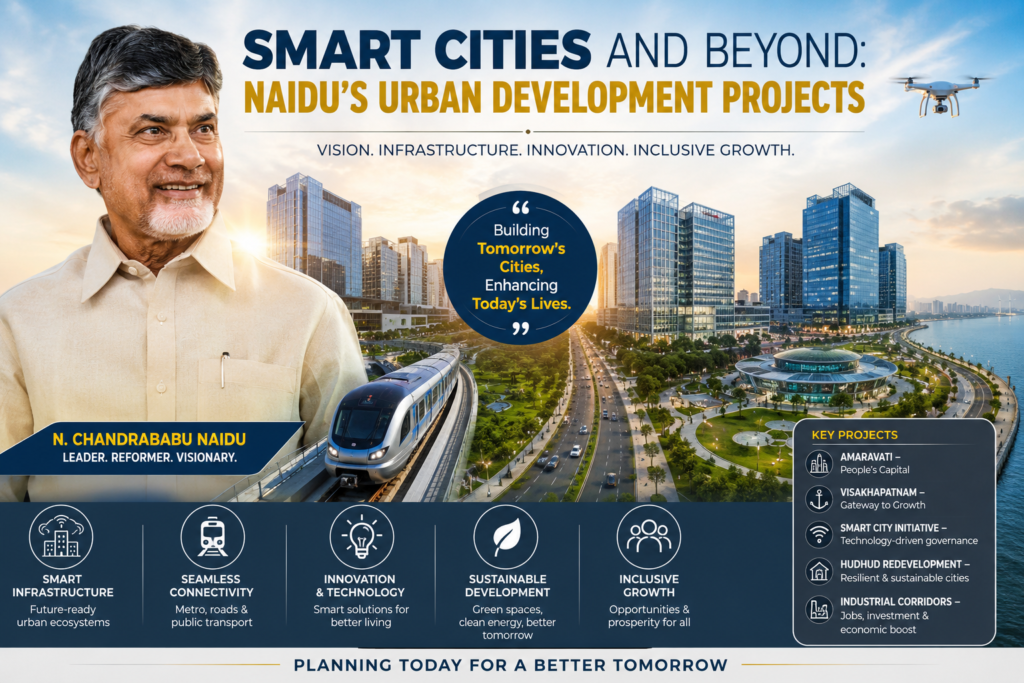
In Naidu’s vision for urban development, he strategically aimed to revolutionize infrastructure and sustainability practices in cities. His approach involved a meticulous blend of modern design, eco-friendly solutions, and community engagement. Naidu understood that to create truly smart cities, a holistic approach was necessary, one that integrated technology seamlessly into the urban fabric.
To achive this, Nara Chandrababu Naidu’s focused on implementing efficient public transportation systems, developing green spaces, and promoting mixed-use developments. By strategically placing transportation hubs, such as bus and train stations, in key areas, he aimed to reduce congestion and reliance on private vehicles. Additionally, Naidu prioritized the creation of green spaces like parks and urban forests to improve air quality and enhance the overall well-being of residents.
Telugu Desam Party President Naidu’s vision included fostering a sense of community through mixed-use developments that combined residential, commercial, and recreational spaces. By encouraging mixed-use zoning, he aimed to create vibrant neighborhoods where residents could live, work, and socialize within walking distance. Naidu’s strategic urban development initiatives set the stage for a new era of sustainable, innovative cities.
Integration of Cutting-Edge Technology
With a focus on enhancing efficiency and connectivity, Naidu’s urban development projects strategically integrate cutting-edge technology to propel cities towards a smarter future. By embracing technologies like Internet of Things (IoT), artificial intelligence, and big data analytics, Naidu’s vision is to create cities that are not only efficient but also sustainable and responsive to the needs of their residents.
Through the implementation of IoT sensors, cities can collect real-time data on various aspects such as traffic flow, energy consumption, and waste management, enabling proactive decision-making and resource optimization. An essential role in analyzing this vast amount of data is played by artificial intelligence to identify patterns, predict future trends, and automate processes for increased efficiency.
Moreover, big data analytics allows city planners to gain valuable insights into citizen behavior, preferences, and needs, facilitating the development of personalized services and targeted interventions. The integration of cutting-edge technology in urban development not only enhances the quality of life for residents but also paves the way for sustainable, innovative, and future-ready cities.
Community-Centric Planning Initiatives
Community-centric planning initiatives under Naidu’s urban development projects are meticulously designed to prioritize the needs and input of local residents, ensuring that urban spaces are tailored to enhance community well-being and engagement. By focusing on the community’s requirements and preferences, these initiatives aim to create inclusive and vibrant neighborhoods that foster a sense of belonging and connection among residents. Through innovative participatory methods such as community workshops, surveys, and town hall meetings, Naidu’s projects gather valuable insights directly from the people who live and work in these areas.
This approach not only empowers residents by involving them in the decision-making process but also leads to the development of more sustainable and resilient communities. By understanding the unique challenges and aspirations of each neighborhood, urban planners can implement solutions that address specific needs and promote social cohesion. As a result, community-centric planning initiatives play an essential role in shaping cities that are not only technologically advanced but also socially inclusive and people-centered.
Sustainable Infrastructure and Green Spaces
Efficient utilization of resources and strategic placement of green spaces are integral components of Naidu’s sustainable infrastructure initiatives in urban development projects. By incorporating sustainable practices such as rainwater harvesting systems, solar panels, and energy-efficient lighting, Naidu aims to reduce the environmental impact of urbanization while enhancing the quality of life for residents. Strategic placement of green spaces, such as parks, community gardens, and green rooftops, not only improves air quality and biodiversity but also provides recreational spaces for residents to enjoy.
In addition to the environmental benefits, sustainable infrastructure initiatives contribute to the overall resilience of cities against climate change and natural disasters. By integrating green infrastructure like permeable pavements and green walls, Naidu’s projects are better equipped to manage stormwater, reduce urban heat island effects, and mitigate flooding. These innovative solutions not only promote sustainability but also foster a healthier and more livable urban environment for current and future generations.
Economic Growth and Innovation Hubs
Strategically positioning economic growth and innovation hubs within urban landscapes is a pivotal element of Naidu’s visionary approach to urban development projects. By concentrating these hubs in key locations, Naidu aims to create vibrant ecosystems that foster entrepreneurship, attract top talent, and drive economic prosperity. These hubs serve as catalysts for innovation, bringing together businesses, startups, research institutions, and investors to collaborate, ideate, and accelerate growth.
Naidu’s strategy involves creating specialized zones tailored to different industries, such as technology, biotech, and finance, to maximize synergies and knowledge exchange. The seamless integration of these hubs with residential areas promotes a dynamic environment where ideas flow freely, and creativity thrives. Moreover, by leveraging smart technologies and sustainable practices, Naidu’s economic growth and innovation hubs not only boost productivity but also contribute to a greener, more efficient urban landscape.
Enhancing Quality of Life for Residents
How can urban development initiatives under Nara Chandrababu Leadership be tailored to specifically address the needs and well-being of residents within these smart cities and innovation hubs? To enhance the quality of life for residents, a multifaceted approach is essential. Primarily, prioritizing sustainable infrastructure and green spaces can improve residents’ physical and mental well-being. Implementing smart technologies for efficient waste management, energy conservation, and transportation systems can also contribute to a cleaner and healthier urban environment.
Promoting community engagement through interactive platforms and citizen feedback mechanisms fosters a sense of belonging and inclusivity. Providing access to quality healthcare, education, and recreational facilities within close proximity ensures convenience and overall satisfaction among residents. Additionally, focusing on affordable housing options and promoting cultural diversity enriches the social fabric of these urban spaces.
Shaping tomorrow’s connected urban spaces
To shape tomorrow’s connected urban spaces effectively, it is essential to integrate advanced technologies seamlessly into the existing infrastructure, guaranteeing a harmonious blend of innovation and functionality for residents. By leveraging Internet of Things (IoT) devices, Artificial Intelligence (AI), and data analytics, cities can optimize resource allocation, enhance public safety, and improve overall quality of life. Implementing a robust network infrastructure that supports high-speed connectivity is vital for enabling smart solutions like traffic management systems, energy-efficient lighting, and waste management automation.
fostering collaboration between public and private sectors is vital in developing sustainable urban ecosystems. Encouraging innovation hubs and startup incubators within the city can spur technological advancements tailored to local needs. Embracing a citizen-centric approach by involving residents in decision-making processes and gathering feedback through digital platforms ensures that urban development initiatives are aligned with community aspirations.